

Navigating data protection emergencies safely

Immediate help in case of a hacker attack!

When every hour counts: cyberattack, compromised email account, or suspicious access? We provide immediate support with data protection assessments, GDPR reporting, and communication with authorities and affected parties.
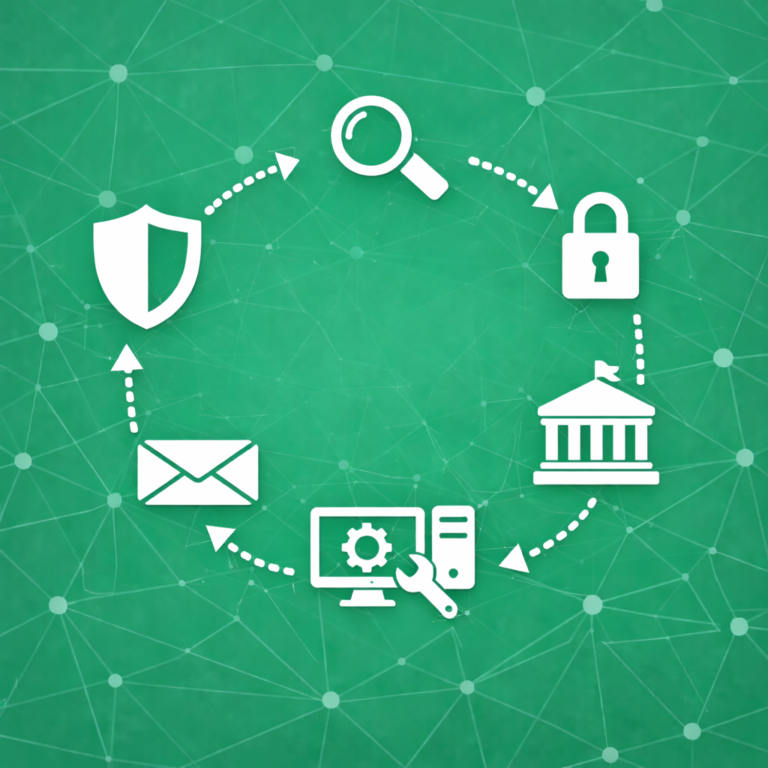
  • Quick response within the 72-hour deadline
  • Legally compliant GDPR assessment and coordination with IT
  • Prevention for the future
Every second counts
A security incident usually comes unexpectedly
Compliance with GDPR deadlines is non-negotiable Act quickly. Implement reliably.

We support you in taking the right measures quickly, preventing major damage, maintaining your customers’ trust, and avoiding fines.

Hacking and phishing attacks are now among the most common security incidents in companies. Often, a compromised email or a single wrong click is enough to give unauthorized third parties access to sensitive data.

In this situation, companies are under enormous pressure:

  • Uncertainty about the actual extent of the damage
  • Time pressure due to the 72-hour reporting requirement under the GDPR
  • Unclear requirements from supervisory and law enforcement authorities
  • Concerns about fines, damage to reputation, and loss of customer trust

In this situation, it is important to seek quick and experienced advice.

Why rapid assistance is crucial:

  • 72-hour deadline: Data breaches must be reported immediately.
  • Preservation of evidence: Every minute counts before traces are lost.
  • Legal pitfalls: Incorrect or delayed reports risk heavy fines.
  • Technical risks: The attack may continue to spread.
  • Communication pressure: Customers, partners, and authorities expect clear information.

Our emergency aid services

1. Initial assessment & immediate measures

  • Quick initial assessment of the incident.
  • Coordination of initial steps with your IT department.
  • Prioritization of the most important immediate measures.
  • Risk assessment according to GDPR criteria.

2. Reliable clarification of GDPR obligations

  • Checking whether notification to the supervisory authority is required.
  • Assessment of whether data subjects need to be informed.
  • Evalutation of the severity and potential consequences of the attack.

3. Communication with authorities

  • Preparation of the report in accordance with Art. 33 GDPR.
  • Drafting of a criminal complaint for the central cybercrime contact point of the State Criminal Police Office.
  • Handling of all correspondence.
  • Contact person for queries from the authorities.

4. Support with IT forensics & root cause analysis

(Cooperation between forensic experts and IT service providers)

  • Selection of suitable forensic experts, if necessary.
  • Cooperation with and coordination of IT service providers.
  • What has been compromised?
  • What data was affected?
  • Is a leak detectable?
  • How many people/data records are potentially affected?

5. Support with informing those affected

  • Preparation of legally compliant notification letters.
  • Coordination of crisis communication.
  • Wording for website notices, mailings, or press releases as needed.

6. Follow-up & prevention

  • Conducting a post-analysis.
  • Recommendations for improving the security architecture.
  • Implementation of two-factor authentication.
  • Review and adjustment of internal processes.
  • Training and awareness-raising for employees (especially regarding phishing).

Frequently asked questions

What is a data protection incident?

A data protection incident occurs when personal data is unintentionally or unauthorized disclosed, altered, lost, or made accessible. This includes, for example, hacked email accounts, compromised passwords, accidentally sent files, or technical malfunctions that could result in data loss.

Which incidents must be reported to the data protection supervisory authority?

A report is required if the incident is likely to pose a risk to the rights and freedoms of affected individuals. This is the case, for example, if sensitive data is involved, a possible data leak cannot be ruled out, or attackers gained access to systems. Important: The report must be made immediately, within 72 hours at the latest.

When must affected individuals be informed?

Affected individuals must be informed if there is a high risk to their rights and freedoms. This is the case, for example, if attackers have gained access to personal customer data or particularly sensitive information. The information must clearly state which data is affected, what risks exist, and what protective measures are recommended.

Should criminal charges also be filed?

Unauthorized access to data by a hacker or as part of a phishing attack typically also is a criminal offense. Even though the perpetrators are often located abroad and police investigations usually remain inconclusive, we recommend filing a criminal complaint in addition to reporting the incident under data protection law. This is often necessary because most cyber and liability insurance policies require a report to the police in the event of a claim.

In the meantime, the State Criminal Police Offices of the federal states have set up central reporting offices for crimes on the Internet, such as the Central Cybercrime Contact Point (ZAC) of the Bavarian State Criminal Police Office. Hacker attacks can be reported online there. This spares the victim a trip to the police station.

We not only report the incident to the relevant reporting center on your behalf, but also coordinate the subsequent communication between the State Criminal Police Office, the police station responsible, and any witnesses (such as your IT service provider).

Who is emergency aid intended for?

  • Small and medium-sized companies
  • IT service providers and system houses
  • Craft businesses, agencies, law firms
  • E-commerce and service providers
  • Clubs and associations
  • Start-ups without an internal data protection department

Are there any exceptions for small businesses?

No. The GDPR applies regardless of the size of the company. Even small businesses must report incidents and inform those affected if there is a significant risk. However, no action is required if the risk is very low. The decisive factor is therefore always the risk assessment, not the size of the company.

Fast, competent, and experienced

We stand by your side during an emergency

In recent years, we have already assisted a large number of companies in managing data protection incidents and submitted numerous reports to the data protection supervisory authorities. This has enabled us not only to help our clients avoid fines, but also to preserve customer trust.

Contact us for immediate assistance

Get advice now

Feel free to contact us for an initial non-binding consultation.

FX Data

Verhoevenstrasse 4
81739 Munich (Germany)